
Combustion Properties
LPG-Air Blending
LPG-air blending is the process of mixing vaporized Liquefied Petroleum Gas (propane or butane, C3H8 / C4H10) with air at controlled ratios to create Synthetic Natural Gas (SNG). Because SNG matches the combustion properties and Wobbe Index of natural gas, industrial facilities can use it as a direct drop-in replacement without modifying their existing boilers, burners, or pipelines.
How the Process Works
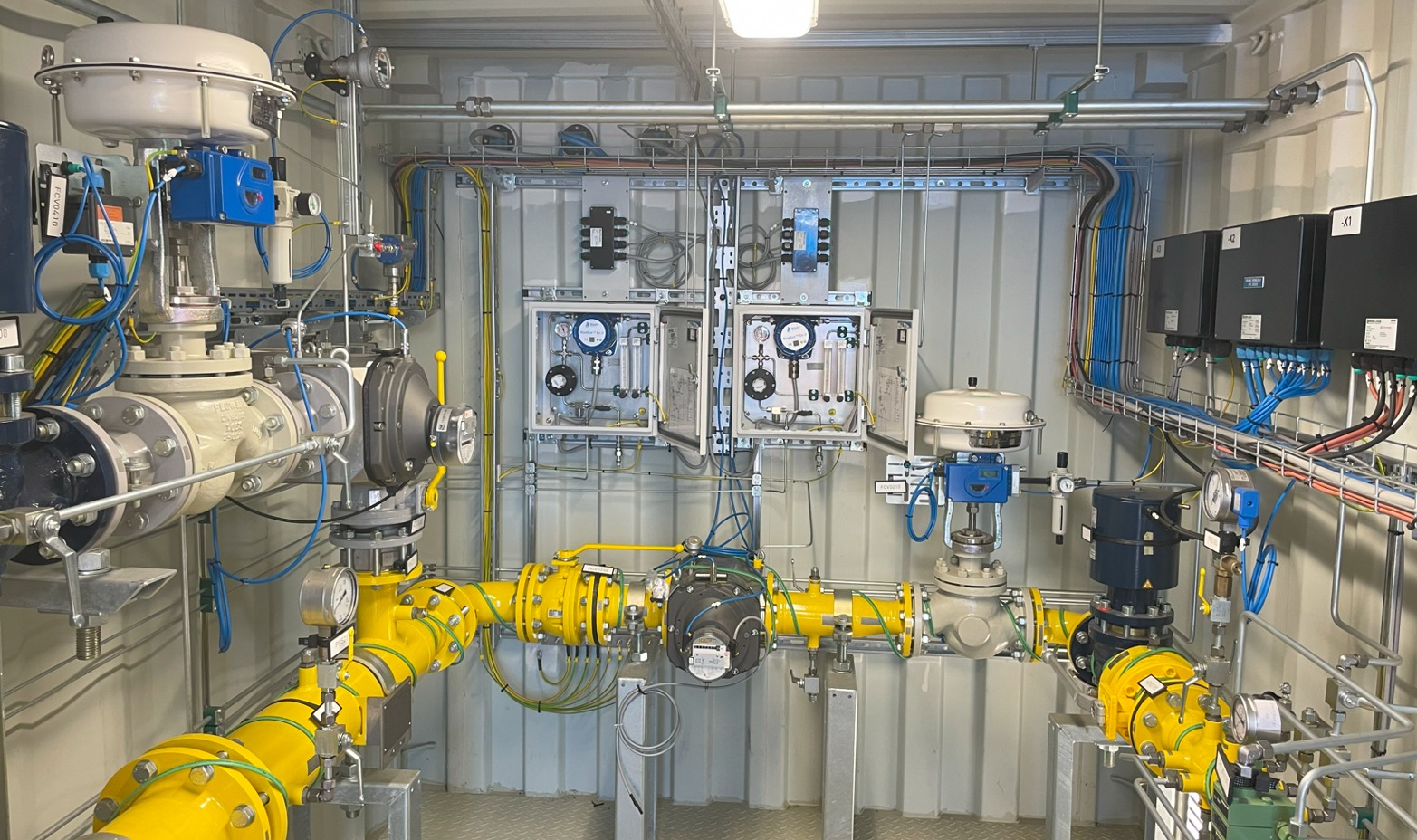
Creating SNG typically involves a continuous, four-stage process:
- Vaporization: Liquid LPG is pumped from storage tanks into a vaporizer, where it is heated and converted into dry gas vapor.
- Pressure Regulation: Both the LPG vapor and the air supply are regulated to precise, matching pressures before entering the mixer.
- Controlled Blending: The two gases are combined – typically at an approximate 55% LPG to 45% air ratio – to replicate natural gas’s calorific value and specific gravity. (Note: This mixture is well above the upper flammability limit of LPG, making it safe to pipe through standard distribution lines).
- Monitoring & Discharge: Sensors (such as flow meters, calorimeters, or densitometers) continuously monitor the output to adjust valve positions dynamically before the SNG enters the plant’s main gas line.
Main Types of Blending Systems
Depending on pressure requirements and plant scale, facilities generally rely on one of two technologies:
| Feature | Venturi Mixers | Parallel-Stream (Proportional) Blenders |
|---|---|---|
| Mechanism | High-pressure LPG vapor passes through a nozzle, drawing in atmospheric air via the Venturi effect. | Separate, regulated streams of LPG vapor and compressed air are metered and combined via automated control valves. |
| Compressed Air | Not required (draws ambient air). | Required (uses an air compressor). |
| Output Pressure | Low pressure (typically up to 0.5 – 1 bar / 8 – 15 psig). | High pressure (typically 0.5 to 17+ bar / 7 to 250 psig). |
| Best For | Smaller capacities, steady loads, and low-pressure burner systems. | Large industrial facilities, fluctuating loads, and strict calorific precision. |
Common Industrial Applications
- Backup Fuel Supply: Provides an automatic, uninterrupted fuel source during natural gas pipeline outages or curtailments.
- Peak Shaving: Supplements natural gas during periods of high demand to avoid utility penalties or supply bottlenecks.
- Tariff Optimization: Allows businesses to sign up for cheaper, interruptible natural gas tariffs and seamlessly switch to SNG when the utility cuts supply.
- Primary Fuel: Serves as the main energy source in regions without natural gas infrastructure while keeping equipment ready for future pipeline connections.