
Combustion Properties
Liquefied Natural Gas (LNG)
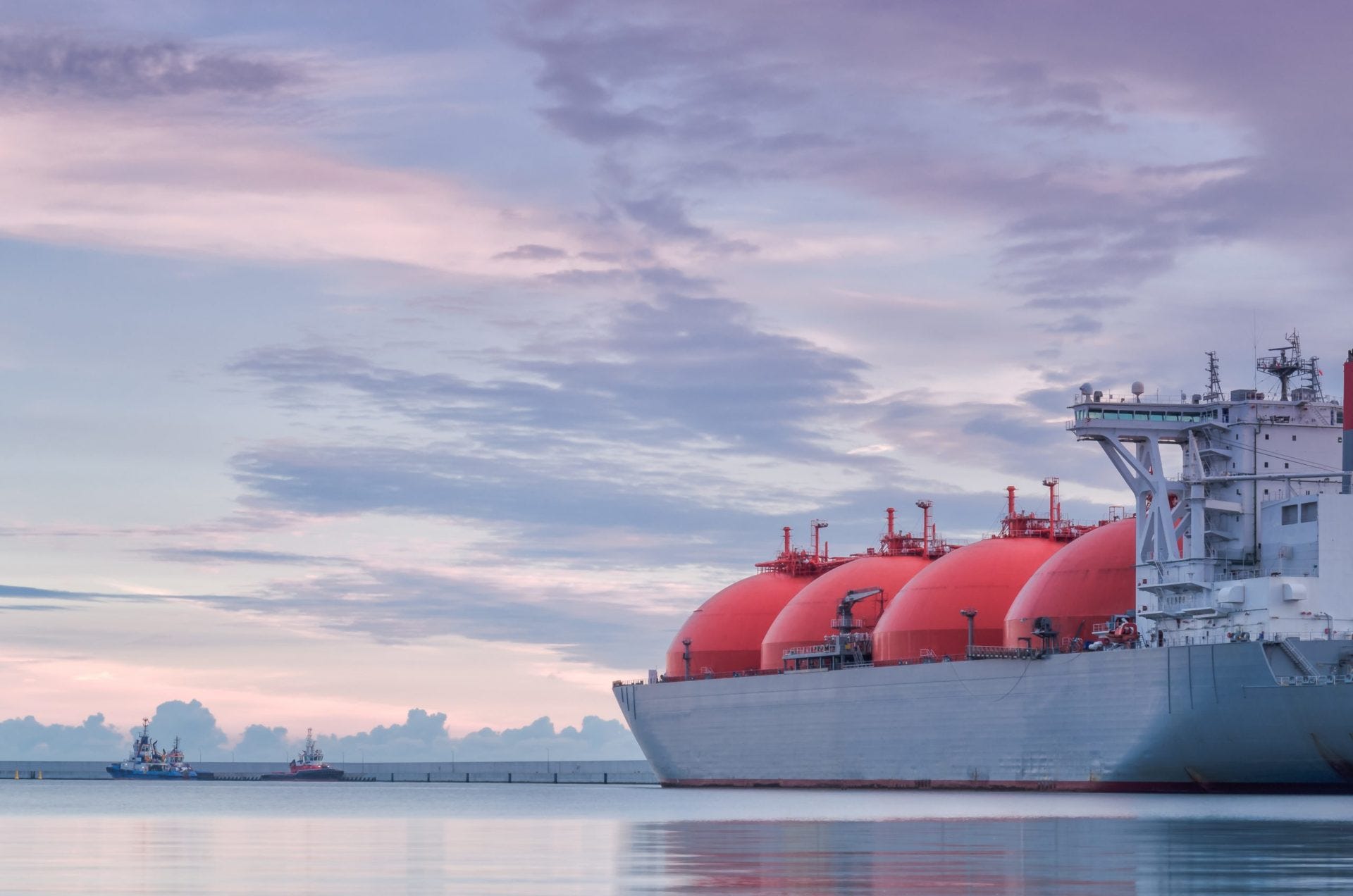
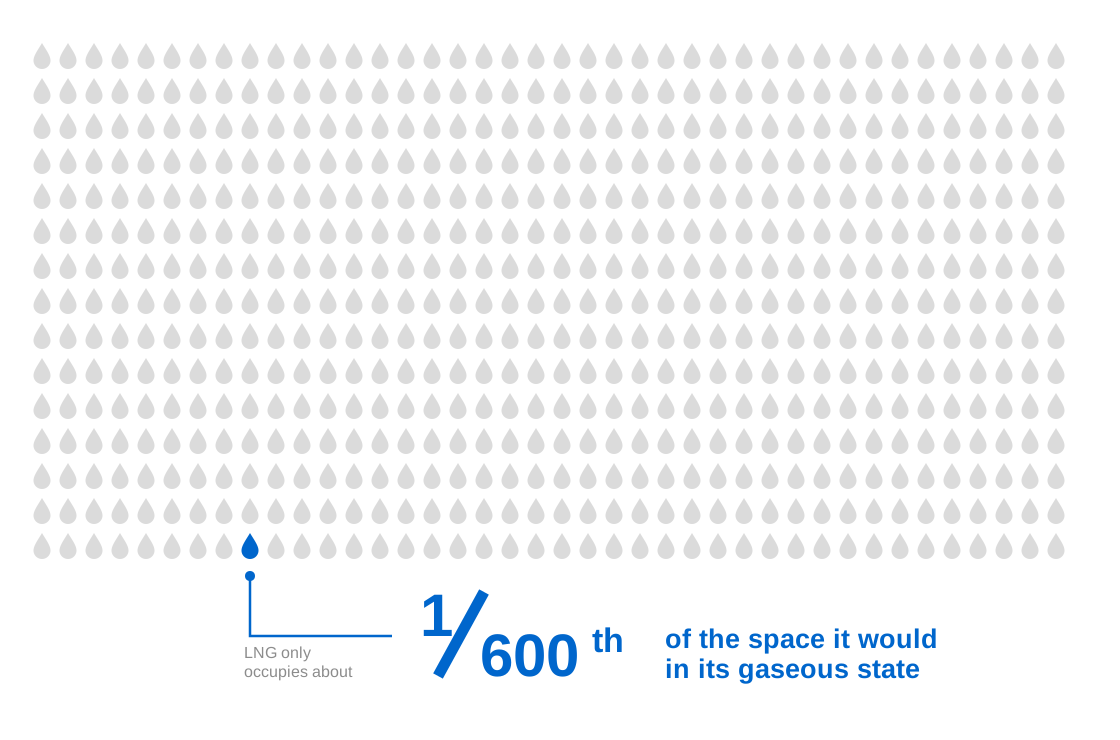
Liquefied Natural Gas (LNG) is natural gas – predominantly methane – cooled to roughly -162°C (-260°F) so it becomes a liquid. Turning it into a liquid reduces its volume by about 600 times, making it practical to ship across oceans in specialized tankers.
LNG is odorless, colorless, non-toxic, and non-corrosive. Because it takes up far less space than gas in a pipeline, it reaches regions that lack direct pipeline connections. LNG is typically warmed and turned back into gas (regasified) at import terminals before entering local distribution networks.
Common Uses
- Power generation: Fuels gas-fired power plants and helps balance grids alongside variable wind and solar power.
- Industrial heating & manufacturing: Supplies heat and serves as a raw material for making chemicals, fertilizers, and plastics.
- Residential & commercial energy: Regasified and piped to homes and businesses for heating and cooking.
- Heavy transport & shipping: Used directly as a marine fuel for ships and as a fuel for heavy-duty trucks.
Related Terms & Synonyms
- GNL (Gas Natural Licuado): The Spanish term for liquefied natural gas, referring to the exact same product.
- Bio-LNG / Renewable LNG: Liquefied biomethane produced from organic waste rather than fossil natural gas.
- CNG (Compressed Natural Gas): Natural gas kept in a gaseous state under high pressure rather than supercooled into a liquid.
- LPG (Liquefied Petroleum Gas): A different fuel made mainly of propane and butane, stored as a liquid under pressure at milder temperatures.
LNG Quality & Parameters
LNG quality refers to the chemical composition, energy content, and combustion properties of liquefied natural gas, which determine whether it can safely enter a local gas grid or fuel an engine without causing operational issues.
Because natural gas comes from different geological fields around the world, the resulting LNG varies from “lean” (almost pure methane) to “rich” (containing higher amounts of ethane, propane, and butane).
Key LNG quality parameters include:
- Wobbe Index: The most critical measure of gas interchangeability. It combines heating value and specific gravity to ensure that different batches of regasified LNG burn safely and stably in burners and turbines without flame lift or soot formation.
- Heating Value (Calorific Value): The amount of thermal energy released when the gas is burned. “Rich” LNG has a higher heating value than “lean” LNG.
- Methane Number (MN): A rating similar to an octane number in gasoline that measures knock resistance. A high Methane Number is essential for LNG used directly as fuel in marine engines and heavy-duty trucks.
- Hydrocarbon Composition: The exact percentage of methane (C1), ethane (C2), propane (C3), butane (C4), and heavier hydrocarbons.
- Impurities & Contaminants: Trace elements – such as water, carbon dioxide (CO2), hydrogen sulfide (H2S), sulfur, and mercury – that must be removed before liquefaction so they do not freeze into solids, block pipes, or corrode aluminum heat exchangers.
Lean vs. Rich LNG
| Characteristic | Lean LNG | Rich LNG |
|---|---|---|
| Composition | High methane (often >95%), very low heavier hydrocarbons | Lower methane (~85–90%), higher ethane, propane, and butane |
| Heating Value & Wobbe Index | Lower | Higher |
| Typical Sources | Australia, Trinidad, parts of the US | Qatar, Nigeria, Malaysia, Algeria |
| Grid Compatibility | Generally fits US and UK grid standards directly | Often fits Asian grids (Japan, South Korea); frequently requires blending with nitrogen in Europe or the US to lower the Wobbe Index |
Why Quality Changes During Transit (“Aging”)
LNG quality is not static. During ocean transport, heat enters the cargo tanks and causes the lightest components – nitrogen and methane – to evaporate first as boil-off gas (BOG). Because methane boils off faster than heavier hydrocarbons like ethane and propane, the remaining liquid becomes denser and richer over time, gradually increasing its heating value and Wobbe Index while lowering its Methane Number.